
By Mohit Chandak, Swan Textiles · A family-run business — Mohit runs Swan Textiles alongside his father.
QUICK ANSWER: Private label innerwear manufacturing is when a factory produces trunks, briefs, or vests to your specification, and you sell them under your own brand name — not the manufacturer’s. Retailers use it to keep the margin a national brand would otherwise take. Distributors use it to turn existing reach into brand equity. Textile and hosiery businesses use it to add a new category without building fresh manufacturing expertise. Read on for how it actually works, step by step.
“Can you put my shop’s name on the neck label instead of yours?”
A distributor asked me exactly that on a call once. That’s the whole idea behind private label manufacturing, stripped of the jargon. He wasn’t asking about supply chains or order specifics — he was asking whether he could stop selling somebody else’s brand and start selling his own, without buying a single knitting machine.
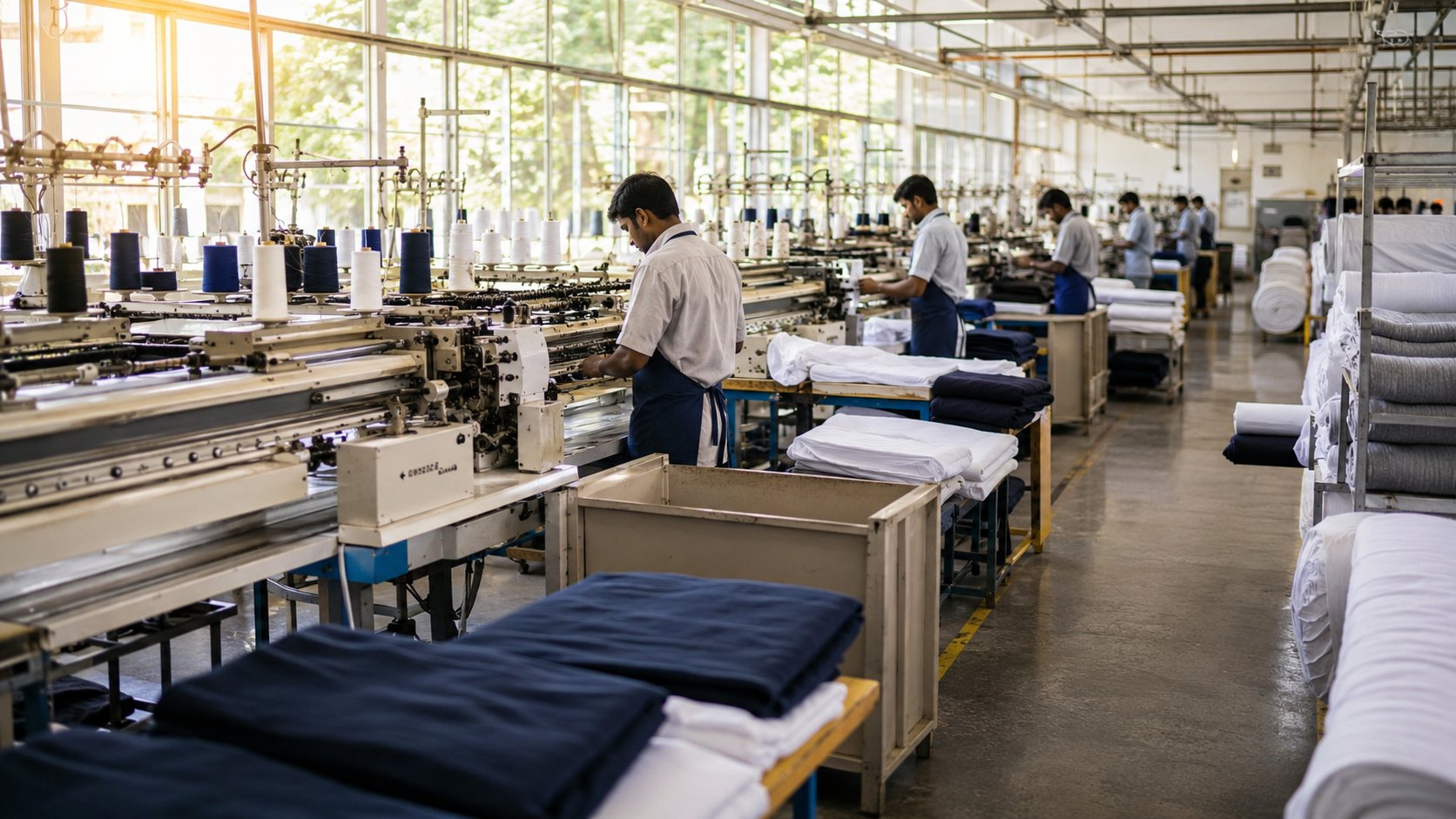
That question comes from more directions than people assume. Sometimes it’s a retailer tired of reselling a national brand at someone else’s margin. Sometimes it’s a distributor who already moves serious volume across a network of shops and realizes their own name would carry weight. And sometimes it’s a textile or hosiery business that already sells socks, T-shirts, or other categories, looking to add innerwear without starting from zero. The process underneath is largely the same for all three — here’s what actually happens once you decide to do it.
Who This Actually Works For
| Buyer Type | Their Usual Motivation | What Changes for Them |
|---|---|---|
| Retailers | Tired of reselling a national brand at someone else’s margin | Wants full brand control at a manageable order size |
| Distributors with existing reach | Already moves volume across a network of shops or regions | Cares most about exclusivity terms and order flexibility at scale |
| Textile/hosiery businesses adding a category | Already sells other apparel, wants to expand into innerwear | Leans on the manufacturer’s fit and fabric expertise more heavily, since it’s a new category for them |
Private Label vs White Label vs Custom Manufacturing
Before you call a manufacturer, know which of these three you’re actually asking for — because “I want my own brand” means different things to different factories, and mixing these up is where a lot of first conversations go sideways.
| Model | Who Owns the Design | Exclusivity | Order Commitment | Best For |
|---|---|---|---|---|
| White Label | Manufacturer’s existing design | None — sold to multiple buyers | Lowest | Testing a category fast, cheap |
| Private Label | Your branding on the manufacturer’s product/process | Exclusive to you (branding, sometimes fit/fabric too) | Moderate — discussed per order | Building a real brand without R&D costs |
| Custom / OEM | Fully buyer-specified, from fabric up | Fully exclusive | Higher — discussed per order | Established brands with exact specs and volume |
If you’re building something that feels like your own line without funding product development from scratch — whether you’re a retailer, a distributor, or a textile business — private label is almost always the right middle ground. White label is cheaper but generic. Custom is exclusive but slow and expensive to get right the first time.
How the Process Actually Works, Step by Step
Here’s the version nobody puts in a sales brochure — the actual sequence, including where it usually snags.
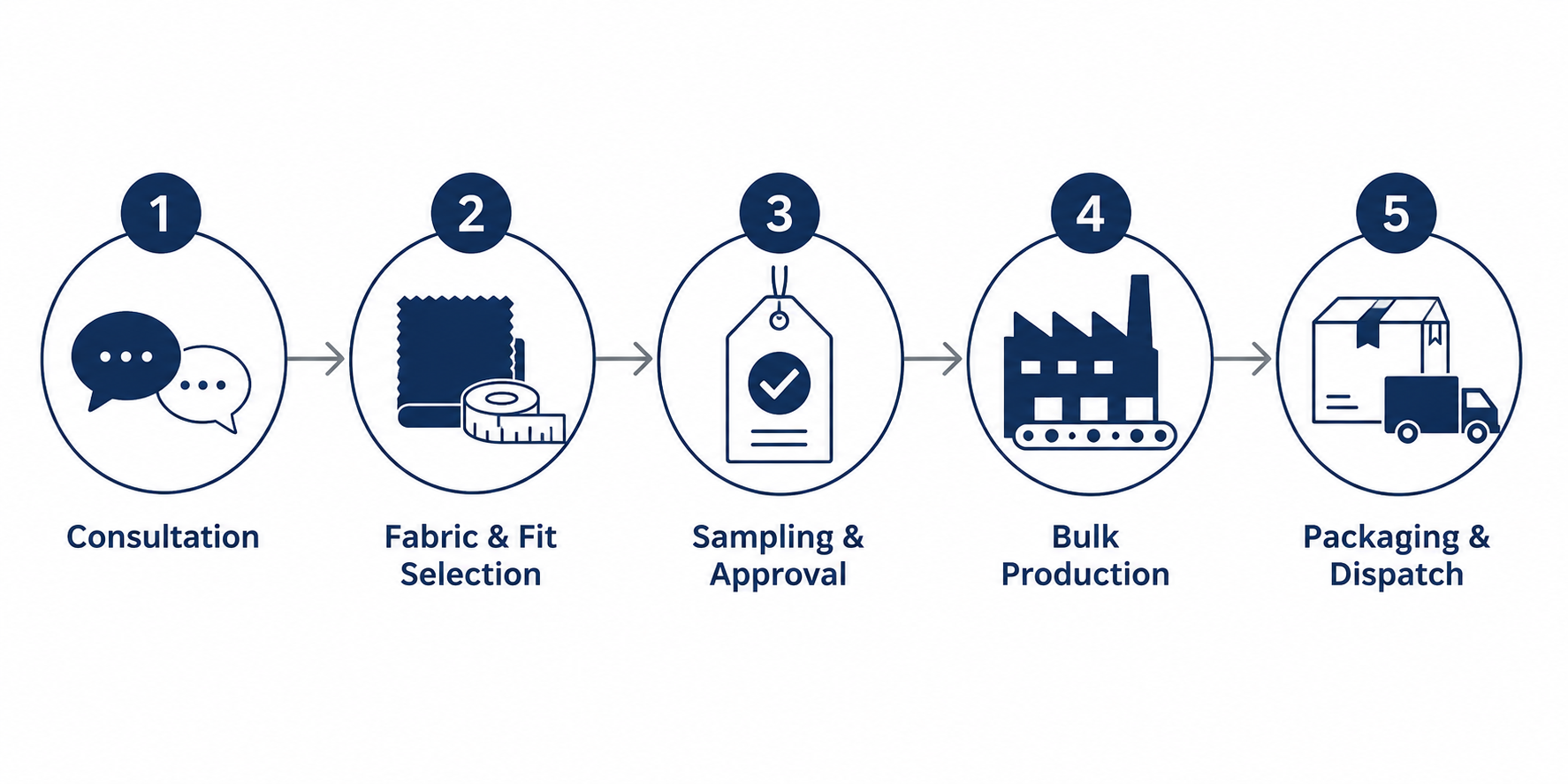
Step 1: You tell us what you’re really trying to sell. Not just “men’s underwear” — your price point, your customer, your rough order size. A premium retail chain and a value-tier wholesaler need completely different fabric weights, and a good manufacturer will push back if what you’re asking for doesn’t match what you’ve told us about your customer.
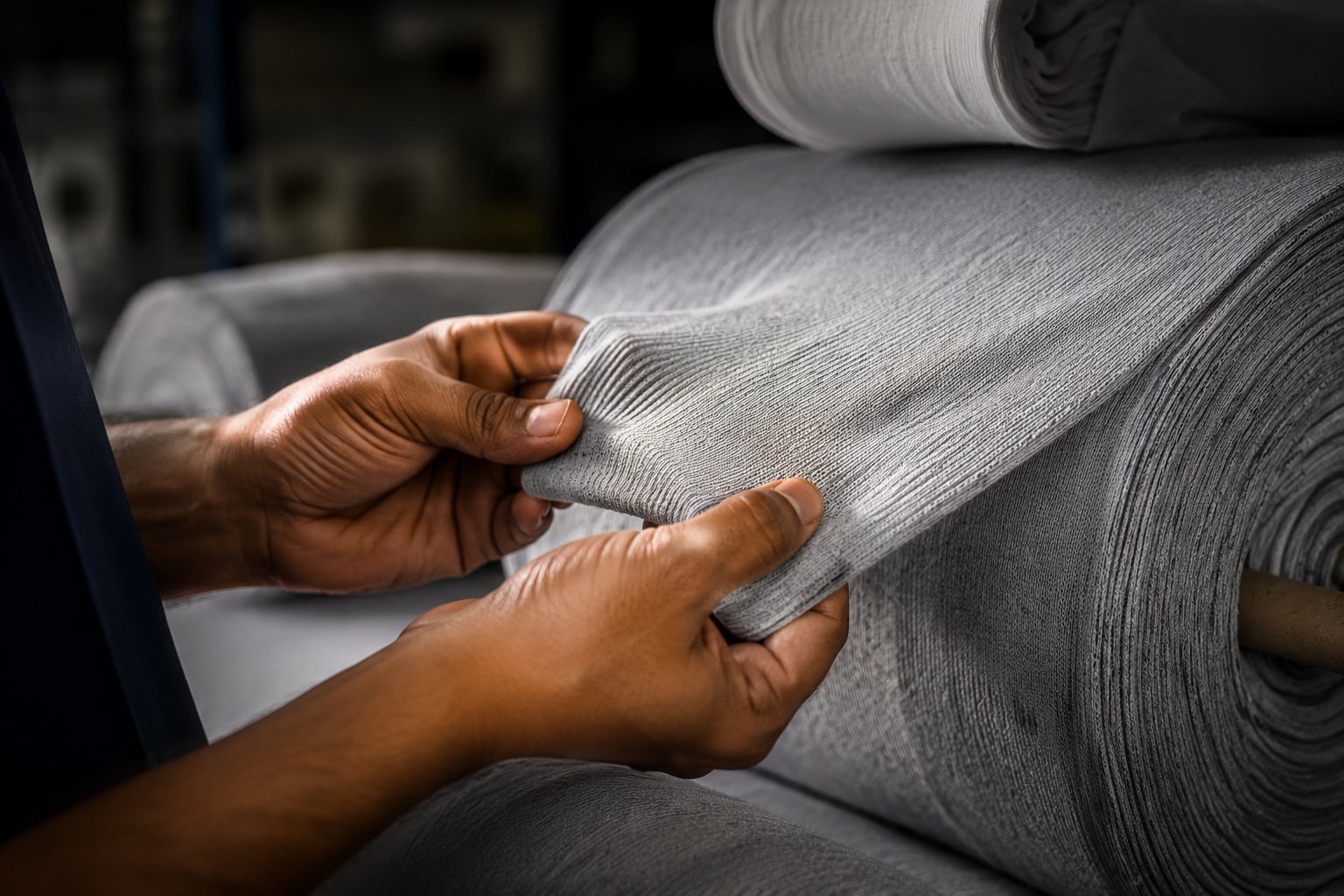
Step 2: Fabric and fit get locked in. Cotton, interlock, or rib knit. Trunk, brief, or vest. Inner elastic or outer elastic. This is where a line like our Bush Supreme Interlock Trunk gets its identity — 100% cotton interlock fabric, imported elastic waistband, and a contoured front pouch, all double-stitched for shape retention. This step feels administrative but it’s where 90% of later problems get prevented — or created.
Step 3: Samples. Always samples. This is the step buyers most often want to skip, especially on a tight timeline, and it’s the one I’d push back on hardest. A photo cannot tell you how a fabric feels against skin or how elastic recovers after a wash. I’ve seen orders get rejected at the bulk stage because a buyer approved a sample from a picture instead of holding the actual garment — an expensive way to learn that lesson. Hold the sample. Every time.
Step 4: Bulk production, with checks along the way — not just at the end. Ask any manufacturer whether they inspect quality in-line (during production) or only at the end. The difference matters more than most first-time buyers realize, because catching a stitching issue on day two of a production run is a fix. Catching it after the whole batch is done is a write-off.
Step 5: Your branding goes on, and it ships. Labels, tags, packaging — as simple as a label swap or as involved as fully custom branded cartons. Then it’s on its way to your warehouse.
Why Businesses Are Choosing Private Label Right Now
The honest answer is margin. Reselling a national brand means selling at a price the brand controls, with a cut already built in for their marketing spend. Private label removes that layer — you’re paying for production, not for someone else’s advertising budget. That math works the same whether you’re a retailer, a distributor, or a textile business adding a new line.
But margin isn’t the only reason, and it’s not always even the main one. For a retailer, the second theme is usually control — the name, the price, the range. For a distributor with an existing network, it’s often about converting reach into brand equity: you already move volume, so why not make that volume carry your own name instead of someone else’s? For a textile or hosiery business branching into innerwear, it’s usually about speed — leaning on a manufacturer’s existing fit and fabric expertise instead of building that knowledge in-house from nothing.
There’s also a quieter benefit that takes longer to show up in the numbers: repeat customers start asking for your brand by name, not just “underwear.” That’s the point where private label stops being a sourcing decision and starts being an actual business asset.
Kolkata’s Hosiery Legacy — Why It Still Matters
Kolkata isn’t the loudest name in Indian textiles anymore — Tiruppur took that title decades ago, and it’s not giving it back. But the region still runs deep: roughly 17,900 hosiery units in and around the city, employing well over a lakh people, in a cluster that’s been making underwear and vests since before Independence. Some of the biggest names on any hosiery shelf in India trace back to this same belt.
BY THE NUMBERS: India’s hosiery market: USD 4.70 billion (2025) → projected to nearly double by 2035
What that history actually buys you isn’t nostalgia. It’s proximity — to raw material sourcing, to skilled labour that’s been doing this work for generations, and to logistics routes into East India, the Northeast, and neighbouring markets like Nepal and Bhutan that a factory in South India simply doesn’t have as directly. That growth is exactly why locking in a reliable regional manufacturing relationship now is worth more than chasing the lowest quote this quarter.
What to Ask Before You Sign With a Manufacturer
Skip the pleasantries. These are the questions that actually separate a good partner from a headache six months in:
- Can you show me real samples, not catalogue photos?
- Does your order structure realistically match the volume I’m placing?
- How many sample revision rounds are included before I’m paying extra?
- Do you check quality in-line, or only at the end of the run?
- What’s your standard lead time from an approved sample to dispatch?
- Can you handle my packaging and labelling in-house, or am I sourcing that separately?
- Have you made this specific product before — trunks and vests are not the same skill set?
A manufacturer who answers these directly, with real samples in hand, is worth more than one quoting the lowest price with vague answers to all seven.
One addition if you’re a distributor or textile business with real existing scale: ask specifically about exclusivity terms and order flexibility across your full network — not just a single order. That’s a different conversation from a first-time buyer’s checklist, and it’s worth having explicitly rather than assuming it’s covered.
Where Private Label Deals Actually Go Wrong
Not in the parts people worry about most.
Order-size mismatches. This is one of the most common friction points — a buyer’s expected order size doesn’t match what the factory is set up to run efficiently. Manufacturers who work across multiple product lines can usually flex this more than a single-product operation, because they batch production across categories.
Quality drift between batches. Almost always traced back to end-of-line-only inspection instead of in-line checks. Ask about this specifically before you sign anything.
Lead times stretching for no clear reason. Nine times out of ten, this traces back to vague specifications at Step 1 that triggered extra sampling rounds. A tight spec sheet upfront saves weeks later.
Assuming packaging and compliance are “obviously” included. They’re often not. Confirm this explicitly. Don’t assume.
Where Swan Textiles Fits Into This
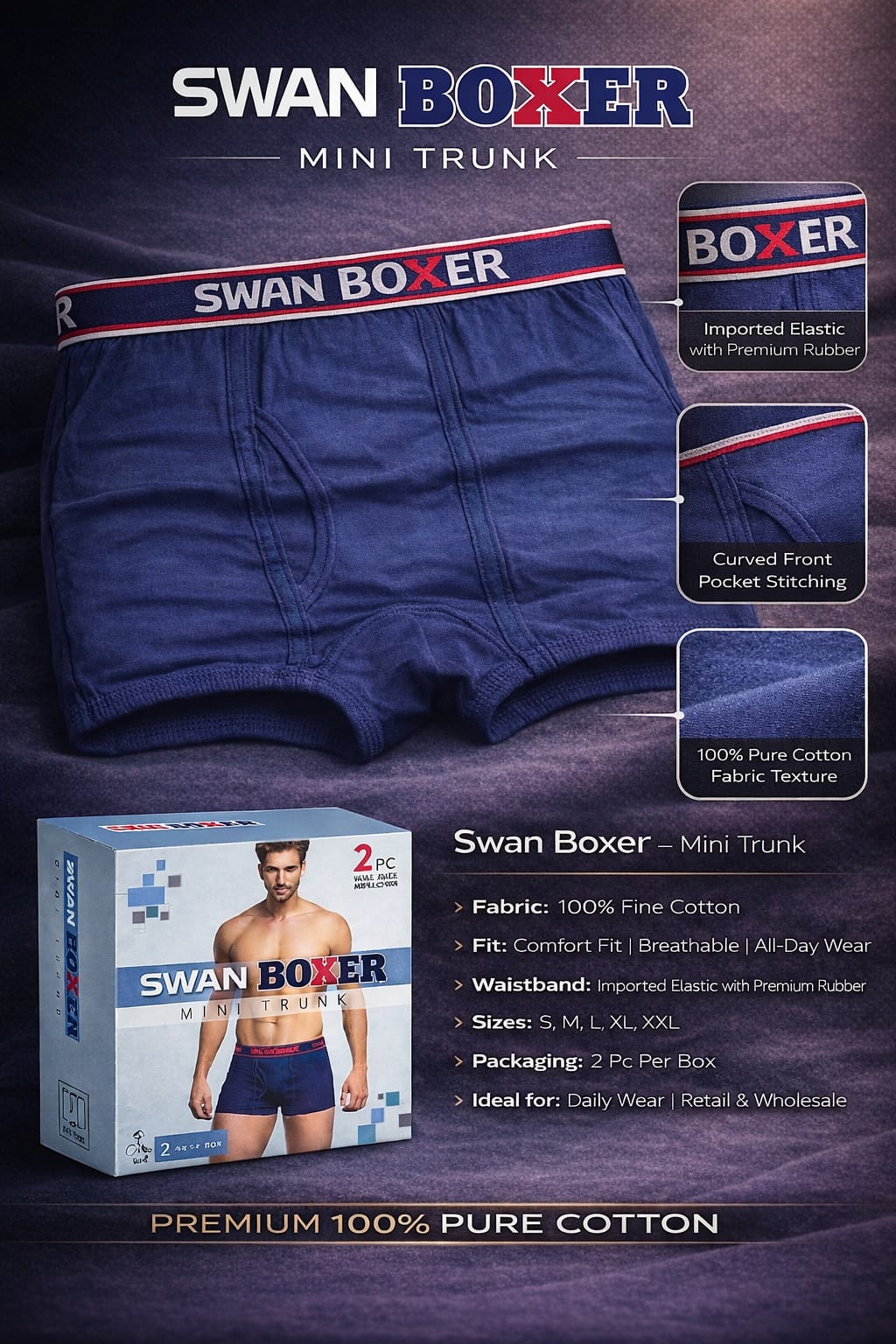
My father and I have been running our own innerwear lines — Bush Supreme, Swan Boxer, and the Swan Boxer Mini Trunk — out of Kolkata for years, which means the fabric choices, fits, and quality checks described above aren’t theory for us. Bush Supreme runs on 100% cotton interlock fabric with an imported elastic waistband and a contoured front pouch, double-stitched for shape retention. Swan Boxer follows the same fine-cotton, comfort-fit standard across S–XXL. These are the exact specifications we bring to a private label conversation — not a generic template.
If you’re weighing this decision — as a retailer, a distributor, or a textile business exploring a new category — we’re glad to walk through fabric options, order structures, and sample timelines with you directly. No pressure, no obligation to sign anything on the first call.
Talk to us about private labeling →
FAQs
What’s the minimum order for private label innerwear? This depends on the specific style, fabric, and level of customization you’re after, so it’s best discussed directly rather than quoted as a flat number. Reach out to us with your rough requirements and we’ll walk you through what’s realistic for your order.
How long does the process take from first call to delivery? Timeline depends on sampling rounds and order size — a clear spec sheet upfront is what keeps this moving quickly. We’re happy to give you a realistic timeline once we understand what you’re ordering.
Can I use my own packaging and branding? Yes. Confirm upfront whether that’s a simple label swap or fully custom packaging — the second option adds lead time.
What’s the real difference between private label and just buying wholesale? Wholesale means reselling someone else’s brand as-is — you’re a stockist. Private label means the product is made specifically for you and sold under your name — you’re a brand owner.
Is this only for retailers, or can distributors and textile businesses use it too? It works for all three. Retailers use it to gain brand control. Distributors with an existing customer network use it to convert that reach into their own brand equity. Textile or hosiery businesses already selling other categories use it to add innerwear without building manufacturing expertise from scratch. What matters most is whether your expected order size matches what a manufacturer is set up to run efficiently — be honest about that in the first conversation, whichever category you fall into.
Conclusion
Private label innerwear manufacturing isn’t complicated once you’ve seen it done properly — but it does reward businesses who ask sharp questions early instead of discovering the gaps after the first bulk order ships. Whether you’re a retailer, a distributor with real reach, or a textile business adding a new category: lock in your fabric and fit specs before sampling, insist on physical samples, and ask about in-line quality checks before you ask about price.
“We’d rather turn away an order that doesn’t fit than ship you something that does.”
If that’s the kind of manufacturing partner you’re looking for, we’re happy to talk it through — fabric options, order structure, actual timelines, no sales pressure attached.