
Here’s a question worth sitting with for a moment: if two products sell at nearly the same retail price, but one gives you double the margin and fewer returns — why would any distributor keep choosing the one with the famous name on it?
Most don’t ask this question out loud. It feels safer to stock what’s “known.” But across India — in metro markets and in local Tier 2 and Tier 3 towns alike — a quiet shift is happening among wholesale innerwear distributors. Smart operators have started asking a different question: not “what will customers recognize?” but “what will actually make me money, order after order?”
This isn’t about attacking big brands. It’s about something more useful: understanding what actually drives profit in the wholesale innerwear business, and why quality — not logo value — is the real foundation of a growing distribution business.
Margin vs. Logo: What Are You Really Selling?
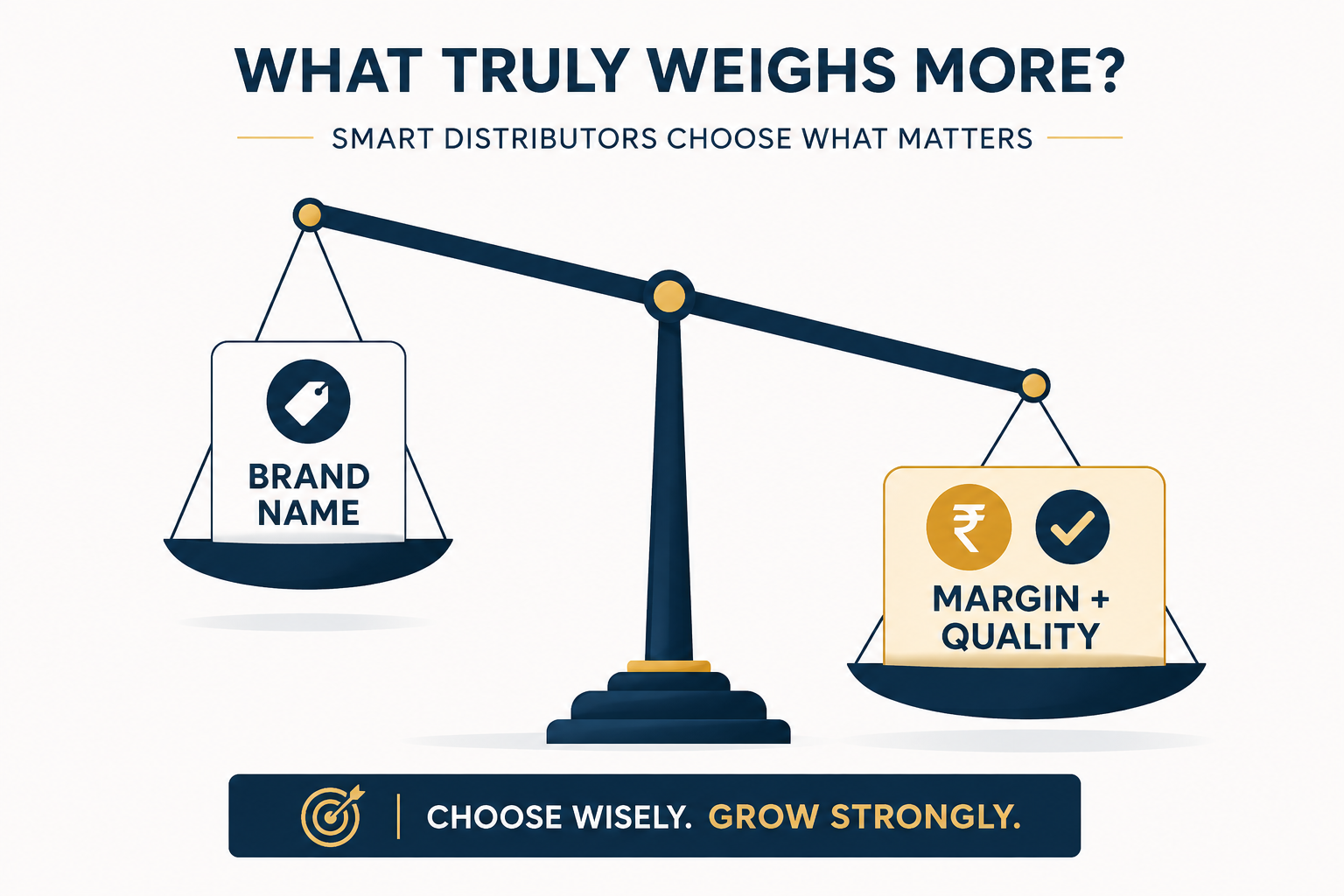
A logo doesn’t pay your staff. A logo doesn’t cover your transport cost. Margin does.
Many wholesale innerwear distributors across India continue stocking well-known brands out of habit, even when the margin barely covers their effort. The logic feels safe: “customers ask for it, so I sell it.” But safe isn’t the same as profitable.
Here’s the business logic smart distributors have started applying: a product doesn’t need a famous name to sell well. It needs to fit properly, hold up in daily wear, and give the retailer — and you — a margin worth the shelf space.
For distributors and stockists working in price-sensitive markets, this matters even more. A quality-first, value-focused innerwear line often gives a stronger margin structure precisely because it isn’t spending on the marketing budget that a big brand’s price already has baked in. That difference goes straight into your pocket, not into someone else’s advertising campaign.
Why Returns Are the Silent Killer of Wholesale Profit
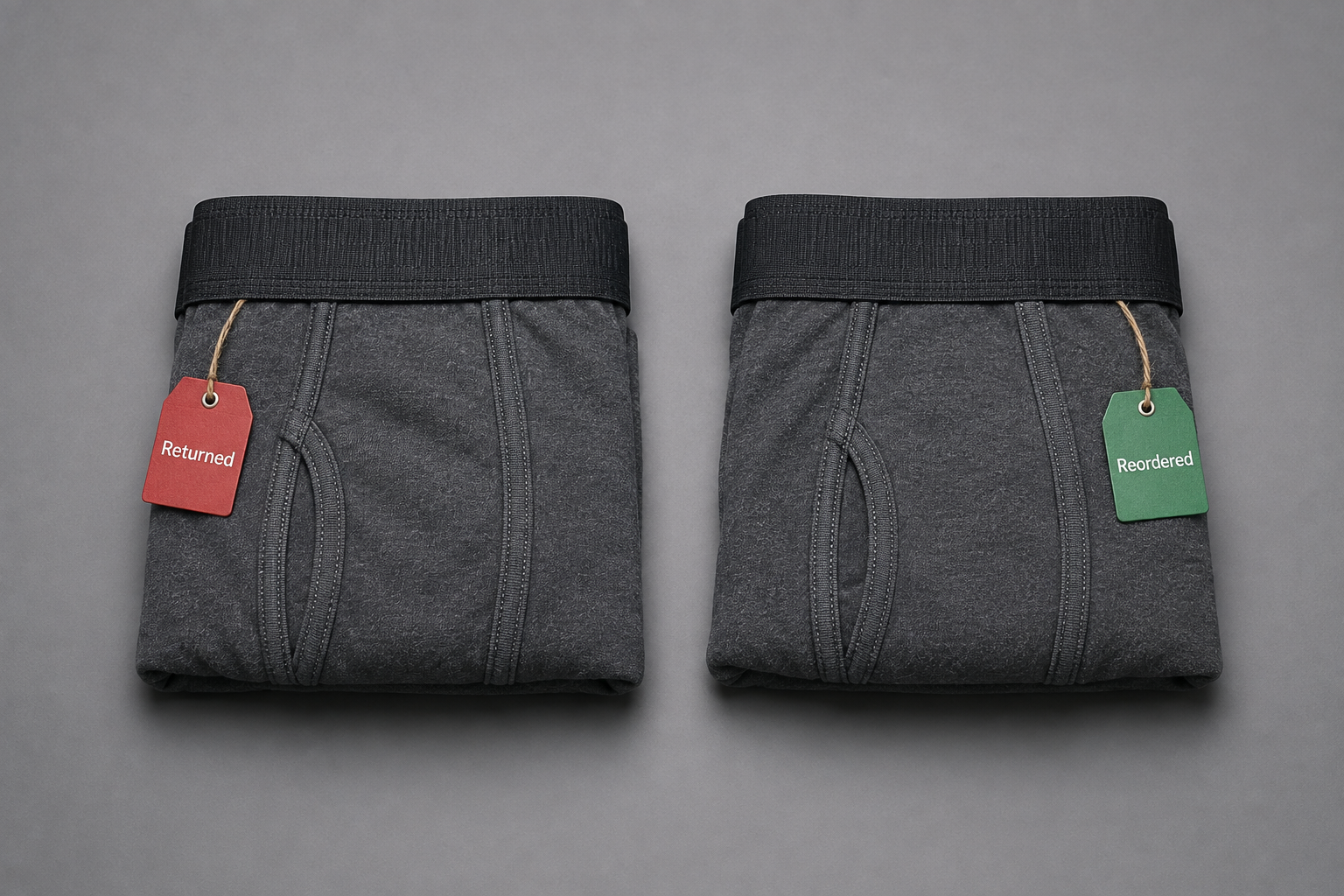
Ask any experienced stockist what actually eats into profit, and very few will say “low selling price.” Most will say something quieter, and far more damaging: returns.
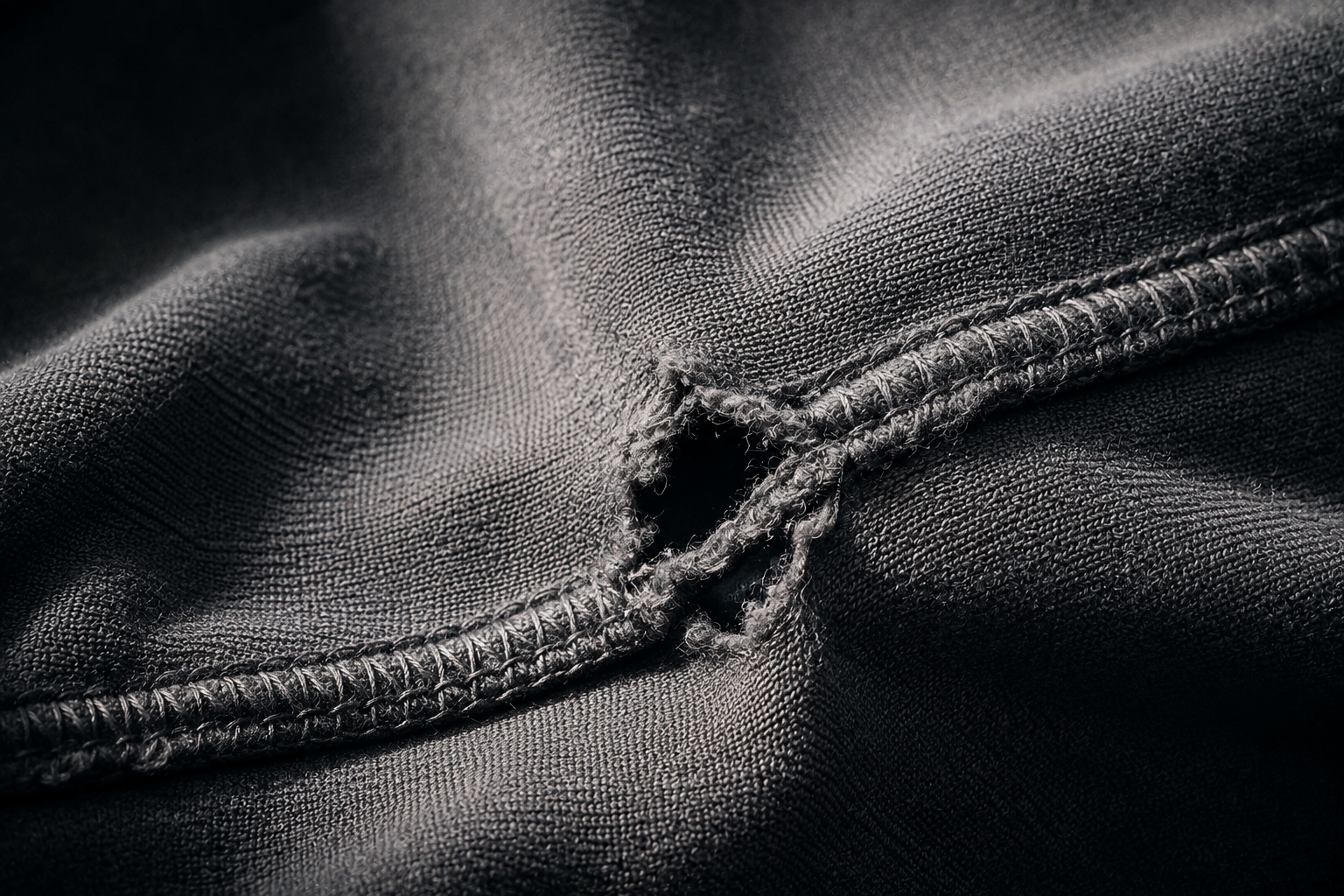
A batch of innerwear that fits inconsistently. Stitching that opens after a few washes. Sizing that varies pack to pack. Each of these doesn’t just cost you a replacement — it costs you the retailer’s trust, and eventually, the reorder.
This is the part of wholesale business that rarely gets discussed openly, but every serious distributor feels it. A product with a slightly lower margin but far fewer returns will always outperform a “big name” product with hidden complaint costs, once you actually calculate it honestly.

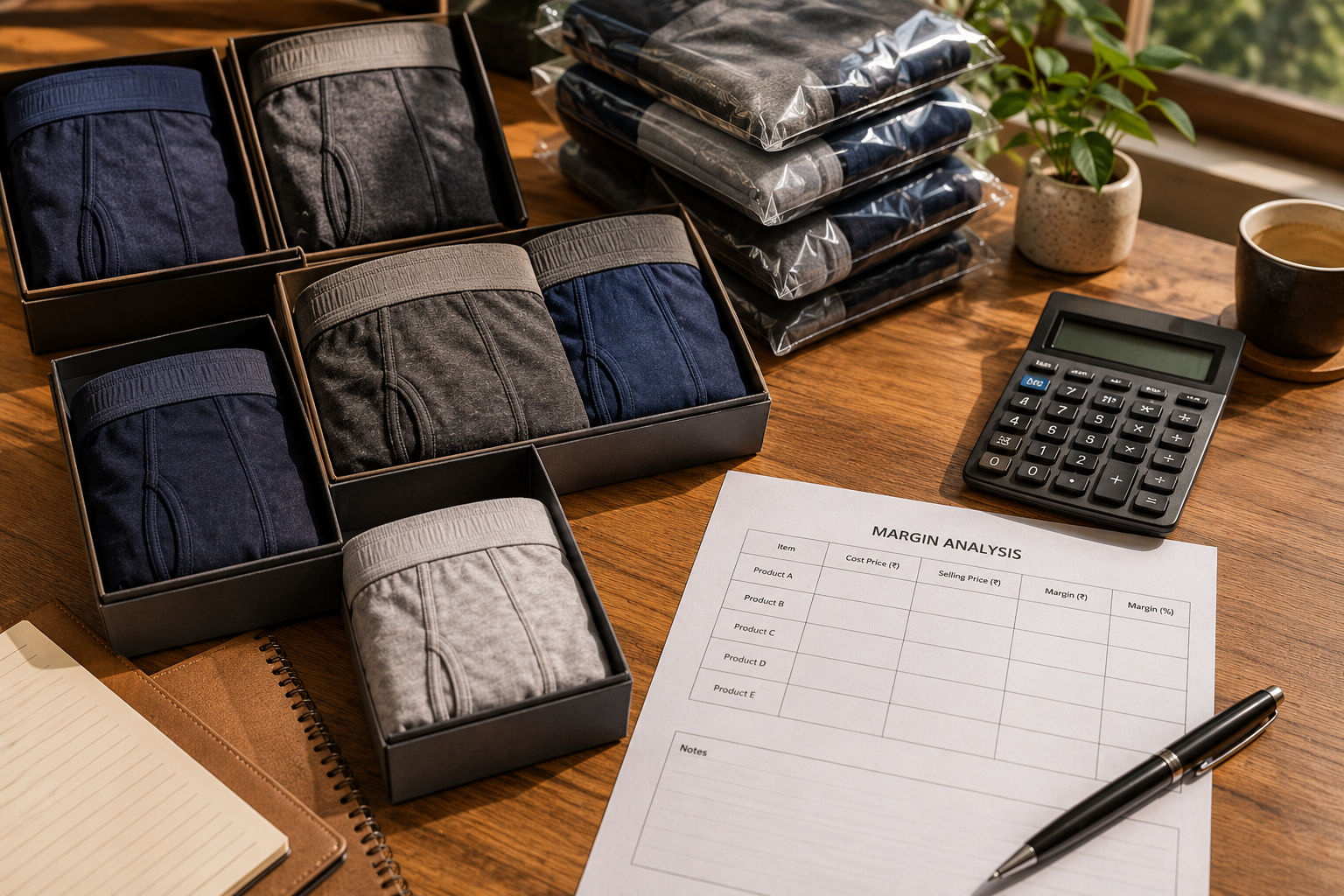
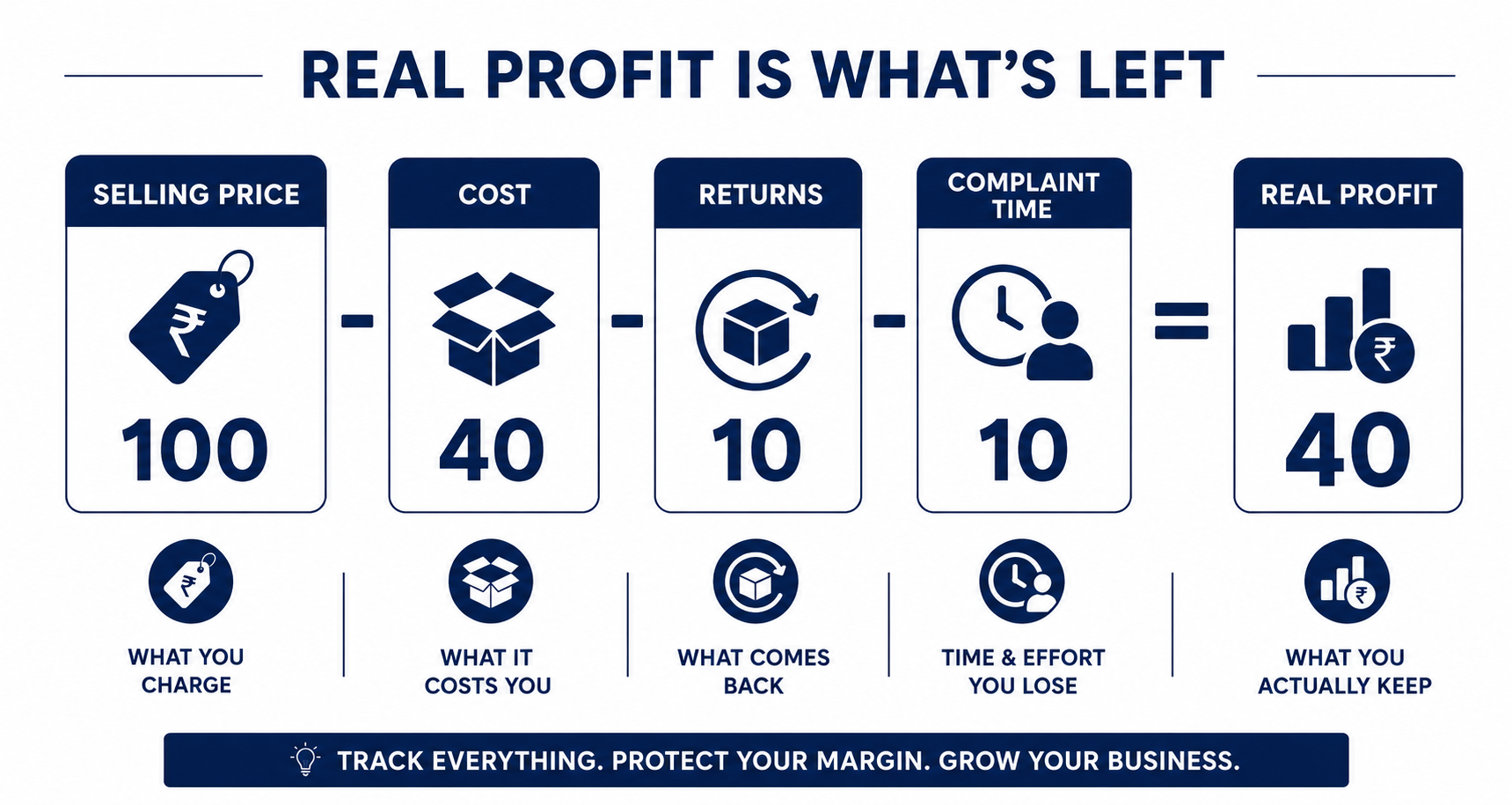
Smart distributors have started calculating margin the right way — not just “selling price minus cost,” but “selling price minus cost minus returns minus complaint-handling time.” That’s the real number. And quality-first innerwear tends to win this calculation quietly, every time.
Four Things That Decide Whether Innerwear Sells Again
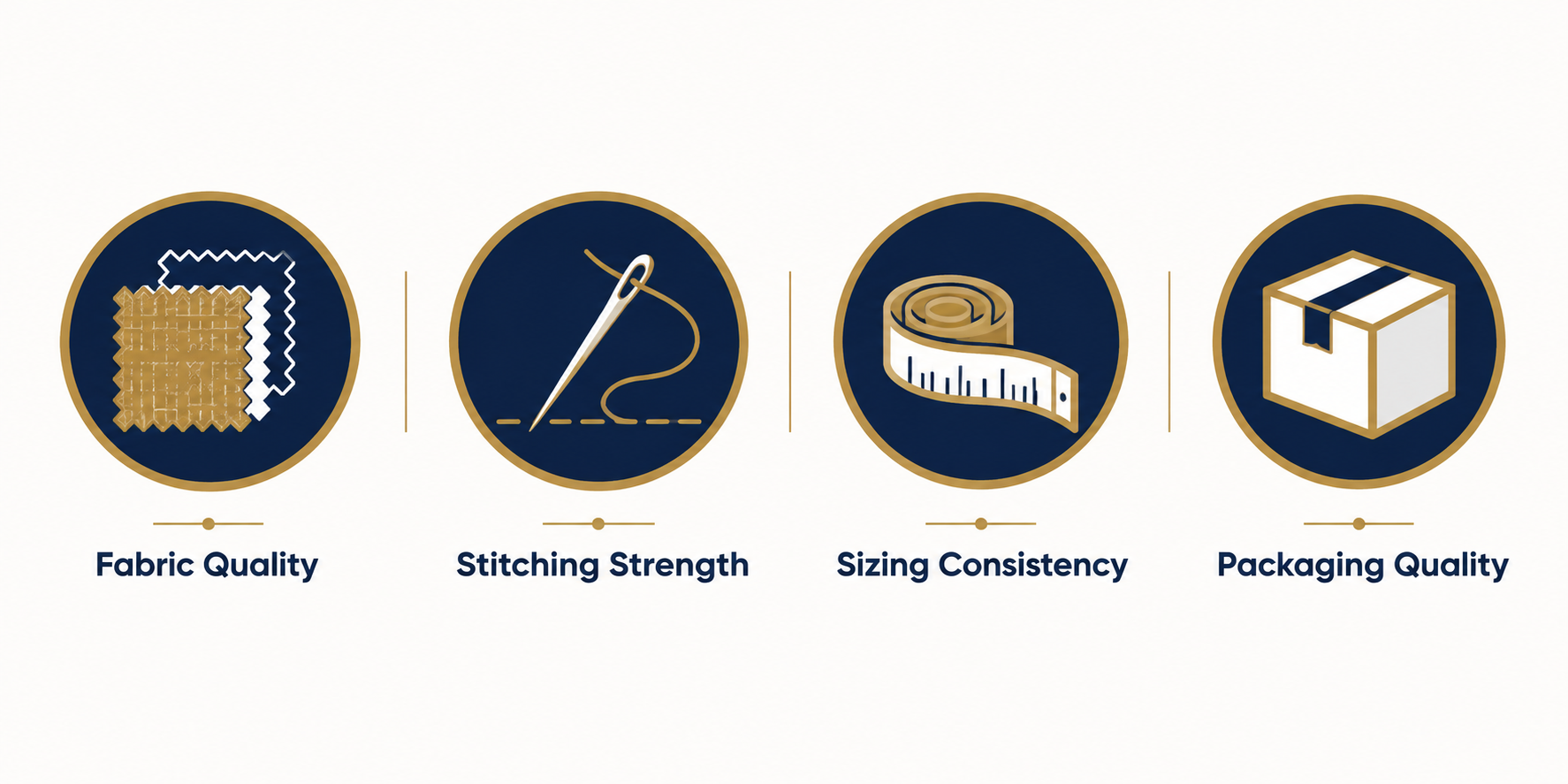
Repeat orders are where wholesale businesses actually grow — not the first sale, the fifth one. Four practical factors decide whether that fifth sale happens.
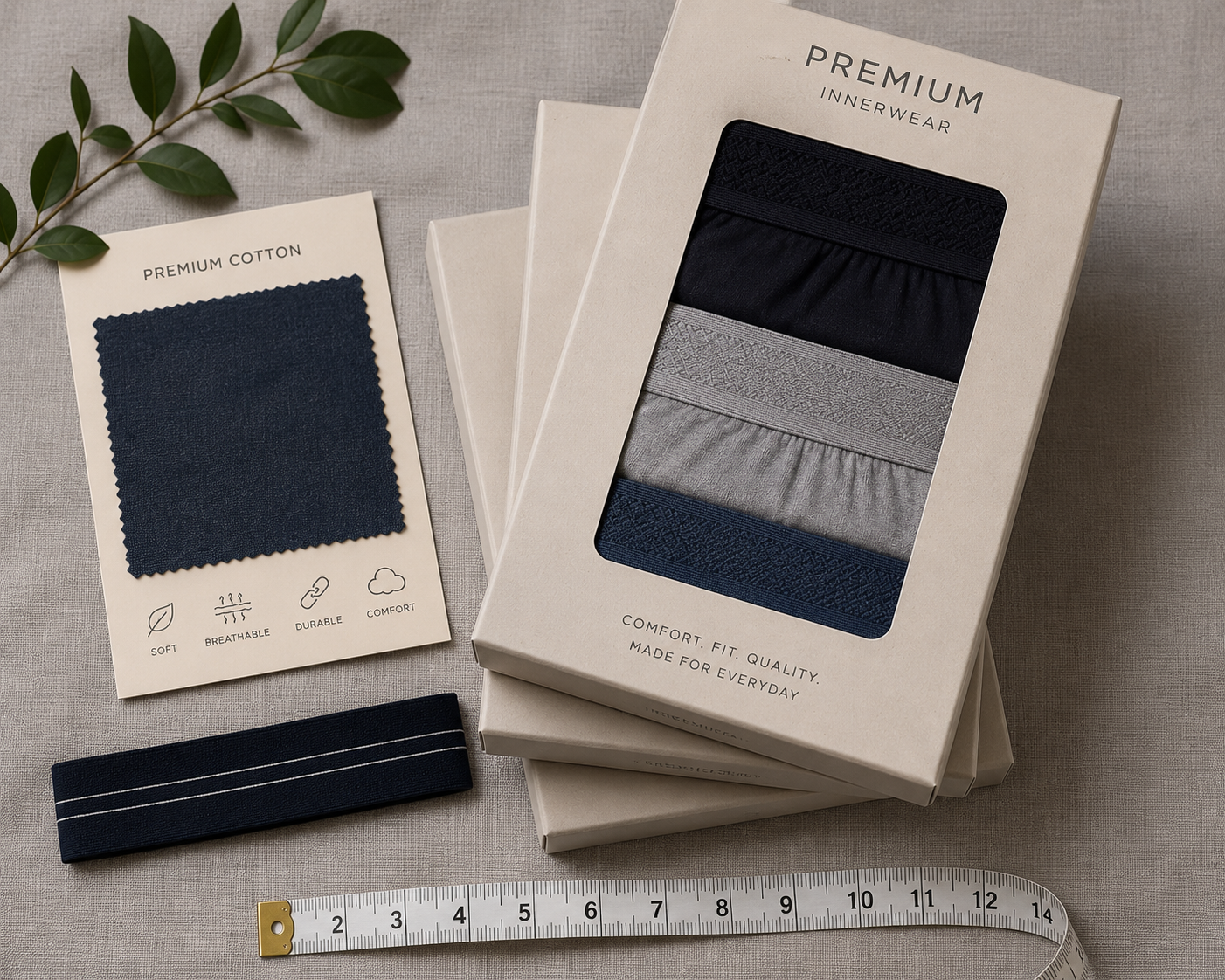
Fabric quality. Interlock and fine cotton fabrics that hold their shape wash after wash create fewer complaints than fabrics that lose shape or feel rough after a few washes. A retailer who gets no complaints reorders without hesitation.
Stitching strength. Double-stitched seams and reinforced pouches matter more than they seem. A garment that survives regular wear without opening at the seams is the single biggest driver of “no complaints” — and no complaints is what makes a retailer trust a stockist again.
Sizing consistency. Nothing damages repeat trade faster than a “Large” that fits differently pack to pack. Distributors who check sizing consistency across a full carton — not just one sample piece — protect themselves from a wave of returns three weeks later.
Packaging quality. In wholesale and retail alike, packaging is the first impression before the product is even touched. Clean, tidy, well-labelled packaging makes a product easier to display and easier to resell — especially in local markets where shelf presentation matters as much as price.
Get these four right, and a product doesn’t need a famous name to keep selling. It sells because it works.
What to Check Before You Place a Bulk Order

Before committing to a bulk order, a few checks — done properly, not rushed — can save months of complaint-handling later.
- Hold the actual sample, not a photo. Fabric feel, elastic recovery, and stitching quality cannot be judged from an image.
- Check three to four pieces from the sample lot, not just one. Consistency matters more than any single piece looking good.
- Ask about the fabric composition directly — cotton content, interlock or rib knit, and GSM (fabric weight) all affect how a product performs after repeated washing.
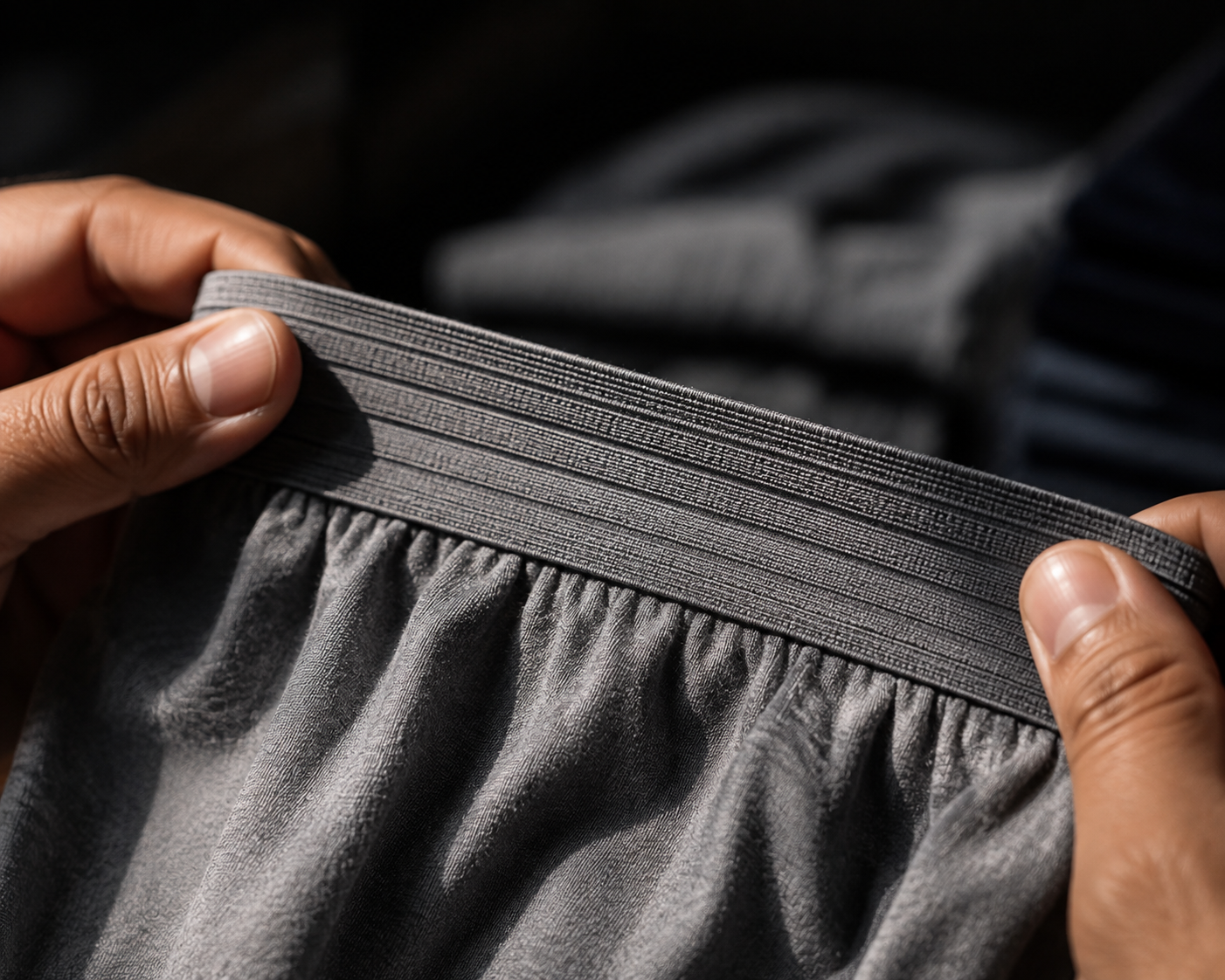
- Check the elastic waistband quality by stretching it — poor elastic is one of the fastest ways a product earns a complaint.
- Confirm sizing charts match actual measurements — not just what’s printed on the box.
None of this takes long. But it’s the difference between a bulk order that reorders itself and one that generates a phone call full of complaints in month two.
Questions a Smart Innerwear Distributor Asks a Supplier
The way a supplier answers these questions tells you more than any catalogue:
- Can I see real samples before committing to a bulk quantity?
- What is the fabric composition, and is it consistent across every batch?
- How do you handle quality checks before dispatch?
- What is your policy if a batch has a genuine quality issue?
- Can packaging and labelling be adjusted for my market?
- Do you support flexible order sizes for growing distributors, not just large one-time buyers?
A supplier who answers these clearly and confidently is a supplier who understands that your growth and their growth are connected — not a one-time transaction.
What This Looks Like at Swan Textiles

It’s easy to talk about “quality-first” in the abstract. Here’s what it actually means in practice, on our own production floor in Kolkata.
Our Bush Supreme line runs on 100% cotton interlock fabric with an imported elastic waistband and a contoured front pouch, double-stitched specifically for shape retention after repeated washing — the exact factor that determines whether a retailer calls you with a complaint or places a reorder. Swan Boxer follows the same fine-cotton, comfort-fit standard consistently across S–XXL, which is what lets a distributor promise a retailer that a “Large” ordered in March fits the same as a “Large” ordered in September.
We check sample consistency across multiple pieces per batch — not one piece signed off and the rest assumed — because we’ve seen firsthand how a single inconsistent carton can cost a distributor a retailer relationship that took years to build. This isn’t a marketing claim; it’s the same standard we hold our own retail brand to, which is exactly why we’re comfortable putting it in writing here.
Thinking Like a Business Owner, Not Just a Seller
There’s a mindset shift that separates distributors who grow steadily from those who stay flat year after year. It isn’t capital. It isn’t even market size. It’s how they think about their own role.
A seller asks: “What can I move this month?”
A business owner asks: “What will keep moving, month after month, with the fewest headaches?”
That second question naturally leads away from chasing brand pressure and toward evaluating quality, margin, and supplier reliability on their own merits. It’s a quieter way of doing business — but it’s the one that compounds. Fewer returns. More repeat orders. Retailers who trust your recommendations. A business that grows because it’s built on value, not on borrowed brand pressure.
Across India — in metro hubs and in growing local markets alike — this is exactly the shift happening among the distributors who are scaling steadily rather than just staying busy.
FAQs
Is unbranded or quality-first innerwear actually as good as big brands?
Quality depends on the manufacturer, not the logo. Many quality-first manufacturers use the same or better fabric grades, stitching standards, and quality checks — often at a stronger margin for distributors, since the cost isn’t inflated by large advertising budgets.
How do I judge innerwear quality before placing a bulk order?
Check the actual fabric feel, stitching strength, elastic recovery, and sizing consistency across multiple pieces from the sample — not just one piece, and never from a photo alone.
Why do returns matter so much in wholesale innerwear?
Returns quietly eat into margin in ways a simple cost calculation misses — replacement cost, retailer trust, and lost reorders all add up. A product with fewer returns often outperforms a “known name” product once this is calculated honestly.
What should I ask a new innerwear supplier before committing?
Ask about fabric composition consistency, quality-check process during production, policy on genuine defects, and whether they support flexible order sizes for growing distributors.
Does quality-first innerwear work in Tier 2 and Tier 3 markets, or only metros?
It works particularly well in price-sensitive local markets, where retailers and end customers care more about fit, durability, and value than about a printed name — as long as the product performs reliably.
How does packaging affect wholesale resale?
Clean, well-labelled packaging makes a product easier to display and builds retailer confidence before the product is even opened — it’s often an overlooked factor in repeat sales.
What’s the real difference between margin-focused and brand-focused distribution?
Brand-focused distribution leans on recognition to sell. Margin-focused distribution leans on product performance, consistent quality, and supplier reliability — which tends to build a steadier, more profitable business over time.

Ready to Work With a Wholesale Innerwear Supplier Who Thinks About Your Margin?

Talk to Swan Textiles about becoming a wholesale partner →
We’ll walk you through fabric options, order structures, and what to expect from working with us — no pressure, no obligation on the first call.
Conclusion

The wholesale innerwear business rewards distributors who think past the first sale. A famous name might open a conversation, but it’s fabric quality, consistent sizing, honest stitching, and a supplier who answers hard questions clearly that keep a retailer reordering for years.
Margin isn’t found in a logo. It’s built — order after order — on products that simply work, and on a supplier relationship that supports your growth instead of just supplying your shelf. That’s the business smart distributors are quietly building across India right now.